
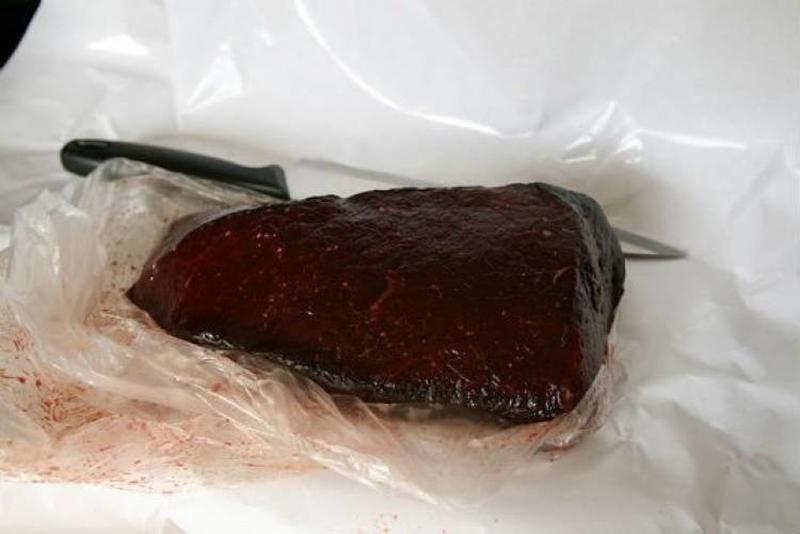
We have all seen South Park's episode featuring whale hunting in Japan. Whale meat is the flesh of whales used for consumption by humans or other animals, and broadly includes other consumed parts as blubber, skin, and organs. It is prepared in various ways and has historically been eaten in many parts of the world, including across Western Europe and colonial America, and not necessarily restricted to coastal communities, since flesh and blubber can be salt-cured.
Despite being denounced by countless detractors on the grounds of wildlife conservation and animal rights, whale meat is still consumed in a large number of countries. The deaths of these endangered creatures are rarely quick and are usually bloody, and yet this still goes on around the world. The meat is said to contain high amounts of mercury and other toxins, which can cause organs to fail and a person to become mad. An occupational hazard for hatters in the 19th century, mercury poisoning inspired the Mad Hatter character in the Alice in Wonderland stories.
Not all celebrities have fame and fortune, some are just famous – and in a ton of debt. They came from rags to riches, then went back to rags. Whether they’ve filed bankruptcy, ended up in court, or just can’t stop spending, celebrities mismanage their money just like everyone else. They just hide it well.
50 Cent coined the term “wanksta,” then “partied like it was his birthday” until he filed Chapter 11 bankruptcy in 2015. The rapper was said to be anywhere between $10 million and $50 million in debt. In 2016, a federal bankruptcy court judge in Connecticut approved a plan for the founder of G-Unit to pay his debts back. He was able to get his bankruptcy discharged in February of the following year.
Following a 45-year-long career in Hollywood, acting in more than 70 films, actor Gary Busey found himself in more debt than he was worth. In 2012, it was reported that Busey owed between $500,000 and $1 million worth of debt, but only had $50,000 to his name. The 74-year-old actor owed money to hospitals, banks, the L.A. Waterworks District, and even a storage company. He filed Chapter 7 bankruptcy that same year. Despite his longstanding career in Hollywood, Busey's net worth is now only $500,000.
Burt Reynolds is still worth five million dollars, but his battles with debt date back more than 20 years. Between bad investments and a pricey divorce from actress Loni Anderson, the 1970s superstar had to deal with over $10 million in debt and decided to file Chapter 11 bankruptcy in 1996. While testifying in a 1994 custody hearing, the South Florida native said he spent $40 million getting through his divorce.
The former Hollywood bad boy, Charlie Sheen owes the IRS nearly $5 million. But that's not all. In 2016, his net worth was reportedly still as high as $150 million, but he was nonetheless $12 million in debt at the time – including mortgages, legal fees, and taxes. That same year, Debt.com reported Sheen owed nearly $300,000 on an American Express card alone.