
Do you know what the classic image of our Milky Way galaxy looks like? All yellow in the center, with two milky-blue arms spiraling away into the blackness of space, right? Wrong. It's taken a few decades of scientists arguing over it to reach that conclusion, but we can now say it's definitely wrong.
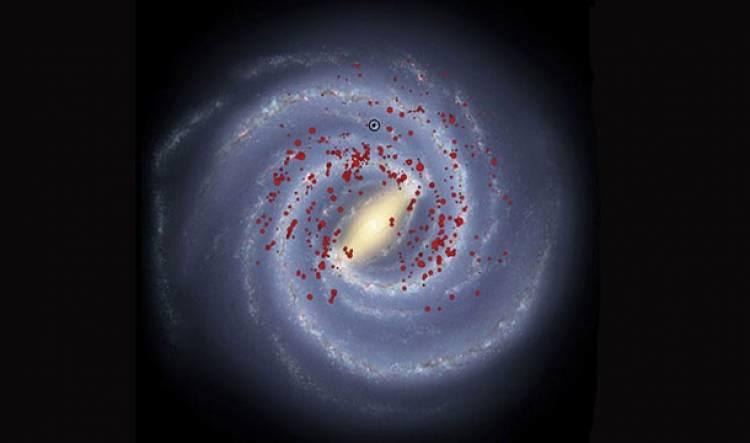
The 'four arm' theory was first proffered by astronomers using radio telescopes in the 1950s, but seemed to be countered when NASA's Spitzer space telescope recorded images of a two armed galaxy in 2008. After poring over the detail and conducting further study, they concluded that because Spitzer works on infrared, it only sought out comparatively lighter, cooler stars like our own Sun. Because of that, it was blind to supermassive hot stars which stay closer to the center of the galaxy, forming smaller, secondary arms of their own.